Presto Laboratories offers complete washing machine safety and performance testing services for washing machines that will be used in a household and for other purposes that are related to the washing machine, such as uniformity as per the IS 302-1 (General Requirements) and IS 302-2-7 (Particular Requirements of Washing Machines).
The testing scheme is aimed at checking electrical safety, mechanical safety, thermal functionality, and operational dependability of the washing machines when used in standard conditions and under anticipated out-of-the-ordinary conditions as established by the Indian Standard.
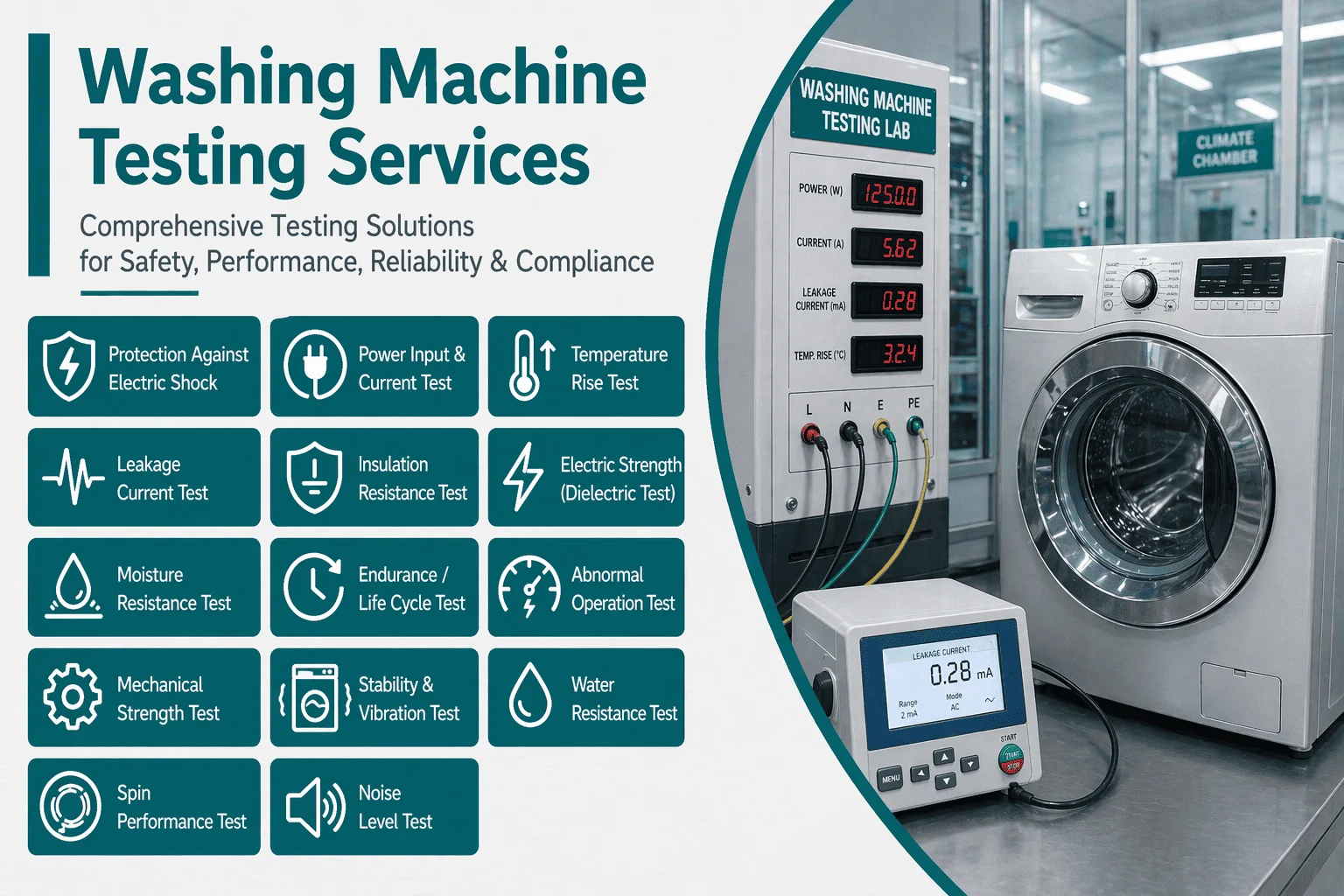
Washing machines are electrically operated appliances that involve moving parts, water ingress, heating elements, and prolonged operation cycles. Any failure in design or construction can result in electric shock, overheating, fire hazards, leakage, or mechanical injury.
Testing as per IS 302-2-7 is essential to:
- Ensure protection against electric shock during operation
- Verify safe operation in the presence of water and moisture
- Assess temperature rise of motors, wiring, and accessible surfaces
- Evaluate the mechanical safety of rotating and moving parts
- Confirm compliance with BIS,QAI & ISO certification and statutory requirements
Presto Laboratories conducts testing strictly as per the procedures and acceptance criteria defined in the relevant parts of IS 302.
Why Washing Machine Testing Matters
Cleaning clothes is not the only function of a good washing machine. In addition to saving time and water, it does not make noise or harm textiles, in addition to saving time and water. All of this is verified by testing.
Testing also aids in the early detection of hidden flaws. For instance, excessive vibration or energy use may not be visible initially but can lead to serious issues later.
What Tests Are Conducted on Washing Machines?
Some of the main tests that Presto Laboratories performs include:
- Washing Performance Test: Measures how effectively the machine cleans
- Spin Drying Test: Evaluates moisture content after spin cycles
- Energy Efficiency Test: Records energy use per cycle
- Noise Test: Measures sound output during operation
- Vibration Test: Checks machine balance during spin
- Electrical Safety Test: Confirms protection against electric hazards
- Durability Test: Simulates long-term usage
- Water Leakage Test: Ensures no leakage during washing or draining
Every test result is recorded and verified by professionals before the final report is prepared.
Washing Machine Testing: What Happens Inside the Lab?
When a washing machine is brought in for testing, it undergoes several rounds of checks:
- Performance Testing: Cleaning, rinsing, and spinning efficiency
- Energy and Water Consumption: Measurement of resource usage
- Noise and Vibration Tests: Analysis of sound and vibration levels
- Durability and Longevity: Multiple cycles to simulate years of use
- Electrical Safety: Earthing, insulation resistance, and overload protection
- Water Leakage and Drainage: Inspection of pipes and drainage systems
- User Interface and Control Panel: Testing of buttons and displays
- Environmental Testing: Exposure to humid and coastal conditions
Benefits of Washing Machine Testing
- Confirms product safety and performance
- Reduces risk of malfunction
- Meets national and global standards
- Builds brand reputation
- Prevents costly recalls
- Improves consumer satisfaction
Standards Followed for Washing Machine Testing
Presto Laboratories has a set of Indian and international standards that direct the washing machine testing and ensure safety, performance, and durability tests. These standards establish standardized testing procedures, thresholds, and guidelines to ensure that results remain the same and acceptable in the home and international markets.
- Electrical safety is founded on IS 302 Part 1. It discusses the insulation, earthing, leakage current, and electric shock protection. This standard is applicable to all domestic electrical appliances, such as washing machines.
- IS 302 Part 2 Section 7 specifically addresses the question of washing machines. It incorporates safe working checks when water is present, heating protection, motor protection, and protection when abnormal conditions occur. This helps confirm that machines remain safe during daily use.
- IS 14155 is used for the performance and construction requirements of domestic washing machines. It defines how machines should perform in terms of washing ability, water usage, and overall operation.
- The IEC 60456 is a world standard that is applied in the measurement of the performance of washing. It evaluates the cleaning ability, rinsing quality, and spin-drying ability under controlled test conditions.
- In the case of spin extractors, IEC 60335-2-4 and IS 302 Part 2 Section 4 are adhered to. These standards include safety criteria of high-speed spinning systems, such as mechanical capabilities and hazard insulation.
- Other common ones used are IEC 60335-1 and IEC 60335-2-7 in global compliance. These standards give attention to the thermal, electrical, and mechanical safety of domestic washing machines.
Presto Laboratories, through these standards, ensures that washing machines are rated to perform at anticipated safety thresholds, assists in certification requirements, and assists manufacturers in launching products that perform with safety and reliability over time.




 Talk to Us
 Book a Test
 Drop a Query