
Loading...

Presto Laboratories provides Ingress Protection (IP) testing to evaluate the degree of protection offered by enclosures against the ingress of solid objects and water. Our testing helps determine whether products can safely operate under defined environmental conditions involving dust exposure and water ingress. Tests are carried out using controlled setups and documented procedures to assess enclosure integrity, sealing effectiveness, and continued safe operation after exposure. IP testing at Presto Laboratories supports product validation, quality assurance, and compliance requirements across electrical, electronic, and industrial applications.
Ingress testing is used to test the effectiveness of a product to prevent the entry of dust and water via its body. Small particles can get into it when it becomes lodged on the circuits, swept into joints, or even clogged up. The water is able to come into direct contact with the core and cause unexpected failure. A product that cannot fight these two elements often stops working early.
The whole process is based on known IP levels, which help users understand what the product can face.
In Presto Laboratories, the check is performed in special rooms through the usage of tools that make dust storms, water jets, or constant water flow. It is not aimed at damaging the product but rather learning what happens to it when nature puts it to the test.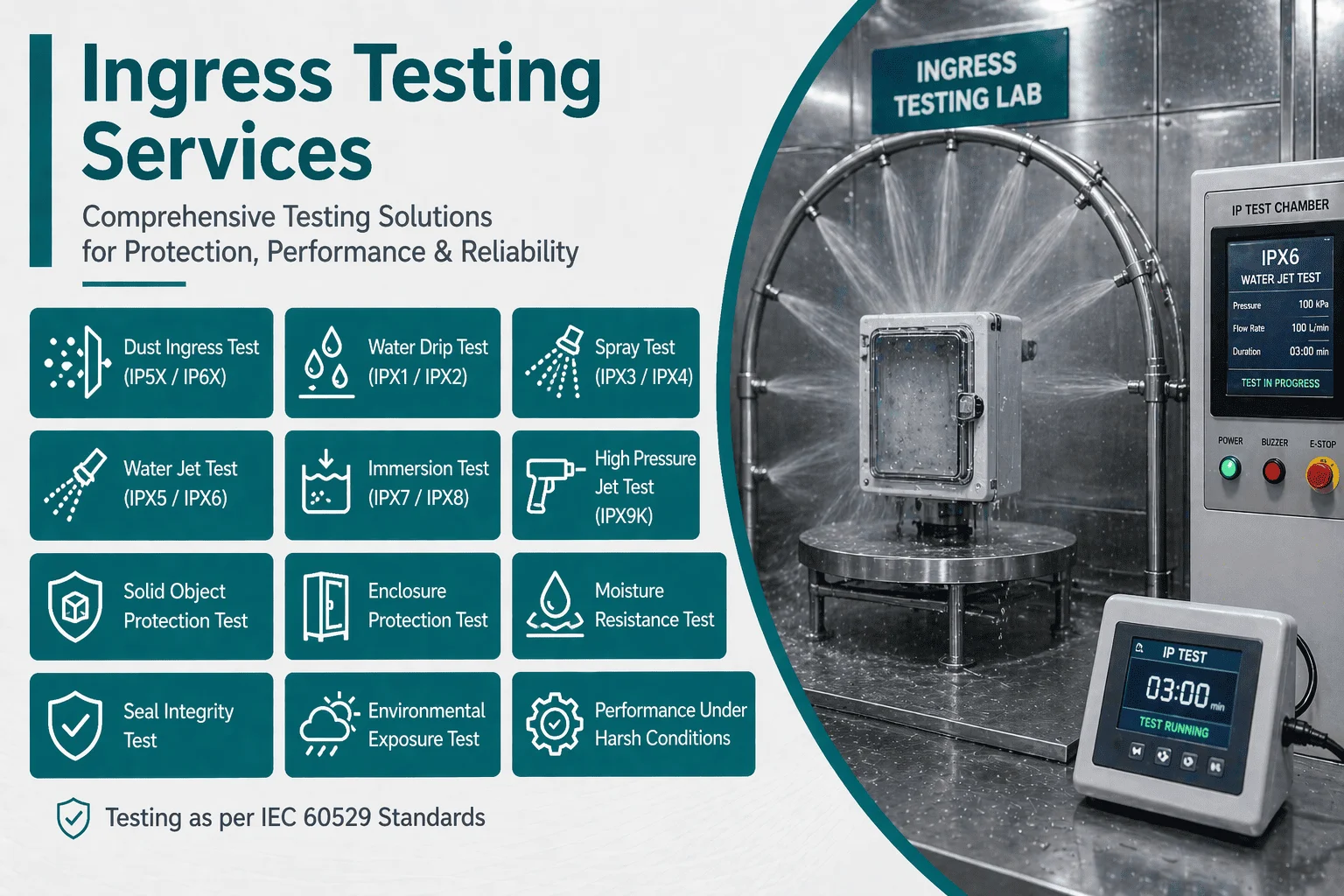
Most of the products remain in areas where they are laden with dust, and these include warehouses, workshops, construction sites, and even houses. Dust particles may create layers on sensitive components, leading to overheating of devices, loss of accuracy, or broken operation.
Moisture is even riskier. A single drop can enter a small gap and reach internal components. Water can cause:
Ingress testing reveals weak spots and guides makers to improve sealing, shapes, and joints. Many companies use these tests before launching a new product.
Presto Laboratories carefully checks seals, bonding quality, and other clues that show weak areas. The final report guides makers on improving product strength.
Many industries depend on IP testing, including:
Presto Laboratories handles products from small handheld devices to large panels, adjusting the method based on size while keeping the core principle intact.
The ingress testing at Presto Laboratories is based on internationally agreed criteria according to which the products should be tested concerning their dust and water resistance. These standards also provide clear test procedures, conditions, and acceptance limits in order to achieve consistency as well as acceptance of results both in Indian and international markets.
IEC 60529 is the most popular standard. It sets the system of IP rating and how the enclosures are tested on solid particles and water. It includes the minimum level of protection against dust and full sealing and immersion in water.
IS 12063 (BIS)- In India, IEC 60529 is correlated with IS 12063, and it is applied to similar ingress protection testing and BIS certification support in India. It assists manufacturers to fit in local compliance standards and maintain outcomes equal to international standards.
In the automotive components, ISO 20653 is commonly used. Other test conditions of this standard are high-pressure jets of water and exposure at various angles. It comes in handy with components that are found in rugged road and weather conditions.
Some other cases also consider NEMA standards, and this specifically applies in industrial enclosures. Such standards are concerned with environmental protection, such as corrosion or the exposure of dust and water.
Adhering to them allows Presto Laboratories to ensure that their products are properly protecting, meet certification requirements, and can enable manufacturers to predict actual operating conditions in the real world.
| Digit | Meaning |
|---|---|
| First Digit | Dust protection level |
| Second Digit | Water protection level |
A higher number means stronger protection.
Presto Laboratories tests products based on the rating the maker wants to achieve. Natural higher ratings with more challenging tests are necessary in order to provide accuracy and safety.

 Talk to Us
 Book a Test
 Drop a Query