
Loading...
Highlighted industries are sectors that drive economic growth, innovation, and job creation. They often involve cutting-edge technologies, sustainable solutions.

We provide reliable testing solutions for solar and renewable energy companies. We make sure every component performs efficiently.

The helmet testing industry ensures safety and reliability for all forms of head protection in transportation, industry, defense, firefighting, and sports.

Fire extinguishers are vital fire-fighting gadgets that have been protecting different commercial, domestic, and food places since 1723.

We assure testing the domestic electrical equipment with the same rigor and care as industrial-grade machinery.

IS 302 Part 1:2024 sets the safety rules for home and commercial electrical dishwashing machines. These machines come under (--) rules in IS 302 Part 1, 2024. They are common in hotels, cafés, and big kitchen setups. They keep dishes clean and safe to use. The food scene in India is growing quickly, and that rise is pushing the need for these machines. The ISI mark shows that the product follows Indian safety rules and gives buyers a sense of trust.
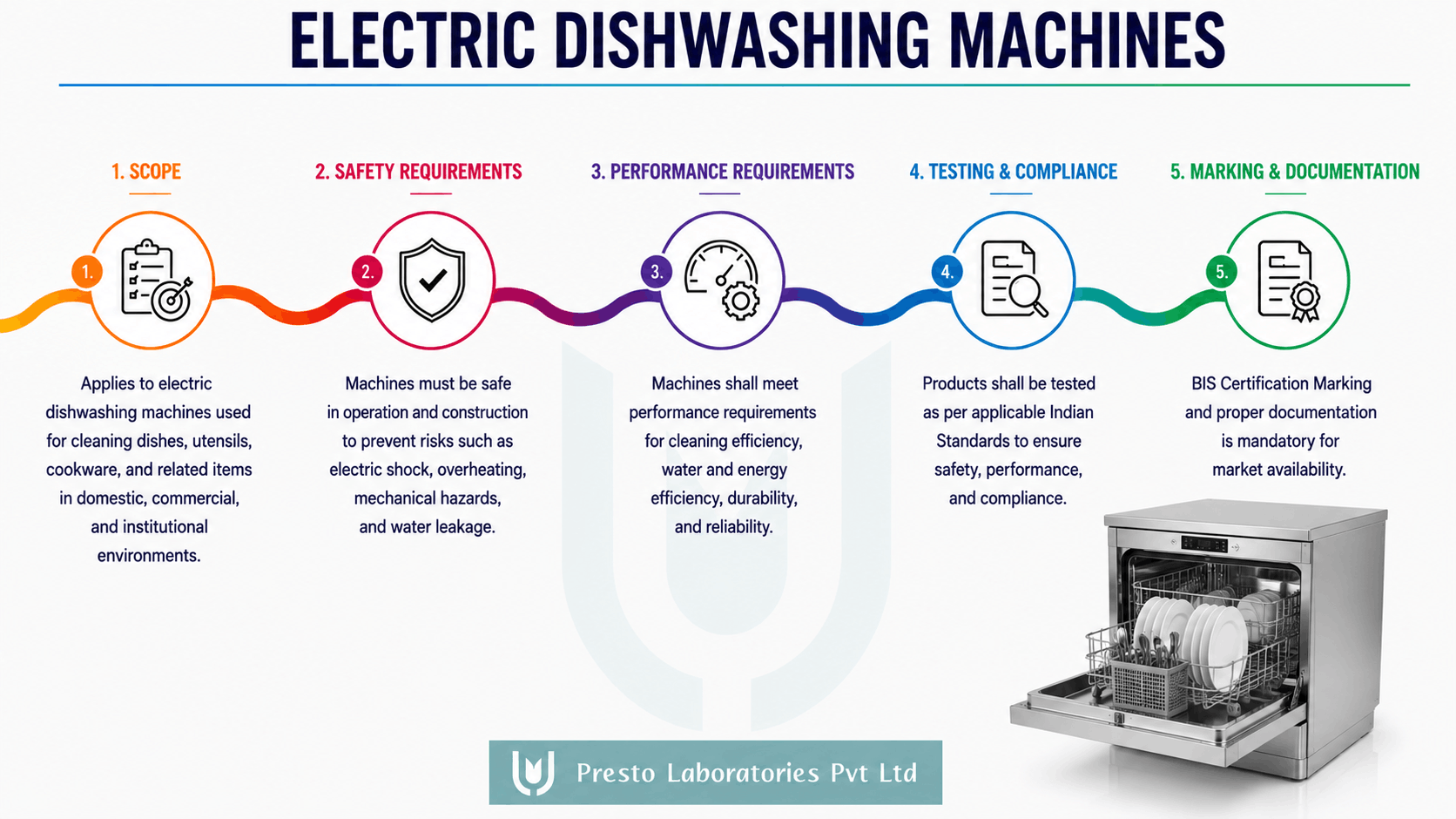
Any maker planning to sell in India must hold a BIS licence as per QCO orders. Customs charges link directly with this licence, which helps goods move without trouble. When a business secures the licence, it builds a stronger brand image in the market.
IS 302 Part 1 2024 covers safety rules for commercial electric dishwashing machines that work up to 250 V in single-phase and 415 V in other supply types. It also includes equipment used in shops and the light industry. The rules focus on common hazards in the home and small setups. They do not talk about industrial tools, medical items, or appliances made for special surroundings. The part also does not consider use by young children or situations needing care.
A QAI & ISO licence helps brands move forward in a growing market. It gives products a strong base of trust. Presto Laboratories guides makers at each step so they can trade in India without trouble.

 Talk to Us
 Book a Test
 Drop a Query