
Loading...
Highlighted industries are sectors that drive economic growth, innovation, and job creation. They often involve cutting-edge technologies, sustainable solutions.

We provide reliable testing solutions for solar and renewable energy companies. We make sure every component performs efficiently.

The helmet testing industry ensures safety and reliability for all forms of head protection in transportation, industry, defense, firefighting, and sports.

Fire extinguishers are vital fire-fighting gadgets that have been protecting different commercial, domestic, and food places since 1723.

We assure testing the domestic electrical equipment with the same rigor and care as industrial-grade machinery.


Vacuum cleaners and water suction cleaning appliances are now common in homes and work areas. They help keep rooms clean and handle dust and spills with ease. Many brands sell these appliances in India, so safety rules matter a lot. These products fall under IS 302 Part 2 Section 2:1997 and IS 302 Part 1 for general points. Makers need the ISI mark before they send their products into the market. Many companies face trouble when they try to sell without this mark, and some even pay heavy fines. BIS approval helps avoid these issues and keeps the product safe for daily use.
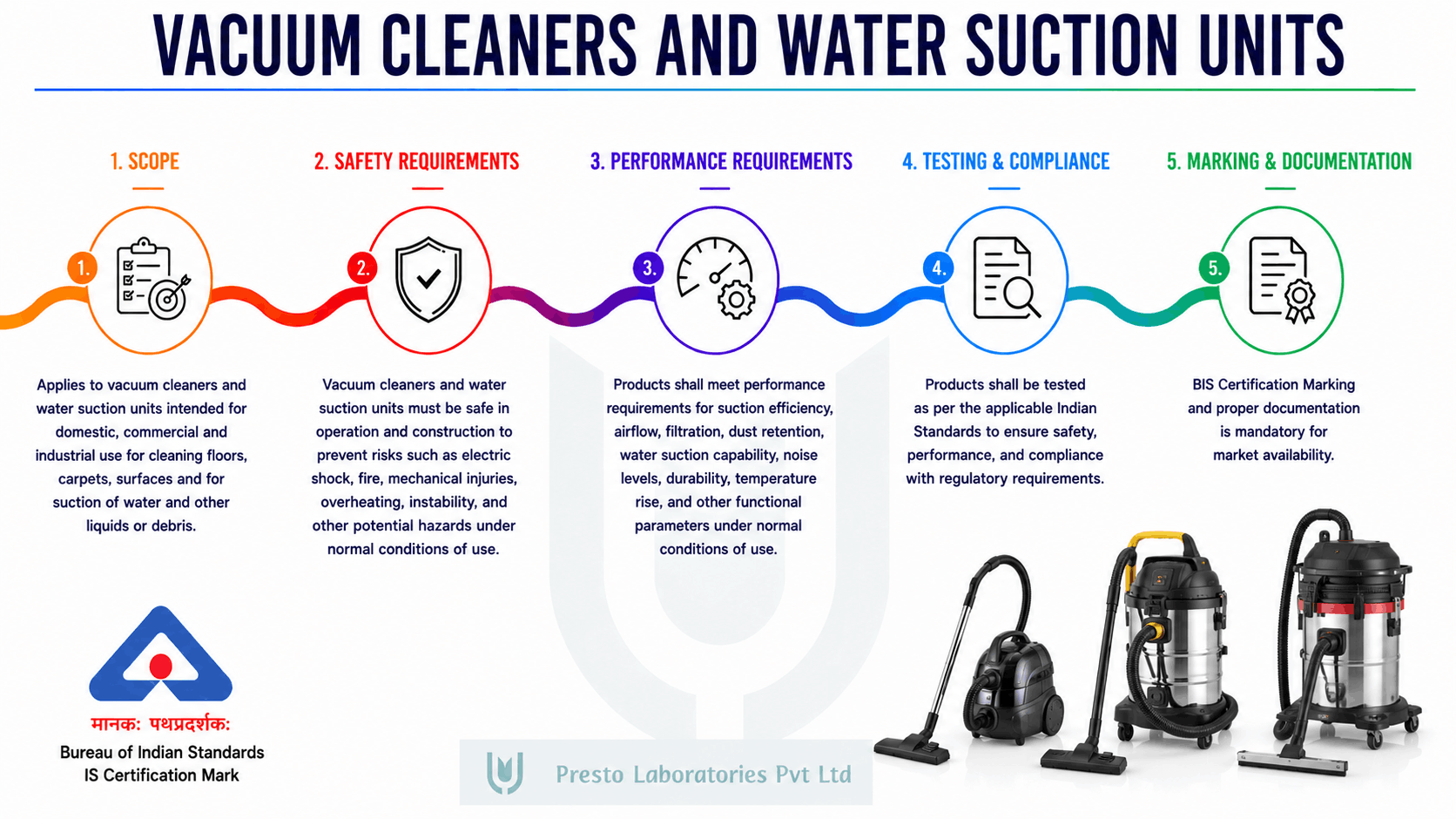
IS 302 Part 2 Section 2:1997 explains the safety and working points for vacuum cleaners and water suction appliances. It covers appliances rated up to 250 volts. It also applies to grooming tools for pets that use suction. Motor heads and hoses are checked through tests to keep the appliance safe during use. Some appliances used in shops and open areas also fall under this rule when they pose a risk to public users. Brands that want better trust from buyers often follow this standard.
BIS approval supports safe use and smooth market entry. Brands gain better trust and steady growth. Presto Laboratories helps makers with testing, papers, and the full approval steps. Makers can reach out for easy support at any time.

 Talk to Us
 Book a Test
 Drop a Query