
Loading...
Highlighted industries are sectors that drive economic growth, innovation, and job creation. They often involve cutting-edge technologies, sustainable solutions.

We provide reliable testing solutions for solar and renewable energy companies. We make sure every component performs efficiently.

The helmet testing industry ensures safety and reliability for all forms of head protection in transportation, industry, defense, firefighting, and sports.

Fire extinguishers are vital fire-fighting gadgets that have been protecting different commercial, domestic, and food places since 1723.

We assure testing the domestic electrical equipment with the same rigor and care as industrial-grade machinery.


Part 1 of Section 302:2024 of the professional standards provides safety regulations on electrically powered oral hygiene appliances. These products consist of electric toothbrushes and water flossers. They are used in homes, clinics, or small care centers. They have been on the rise due to the fact that more people are more concerned about the health of their teeth, as well as having more money to spend.
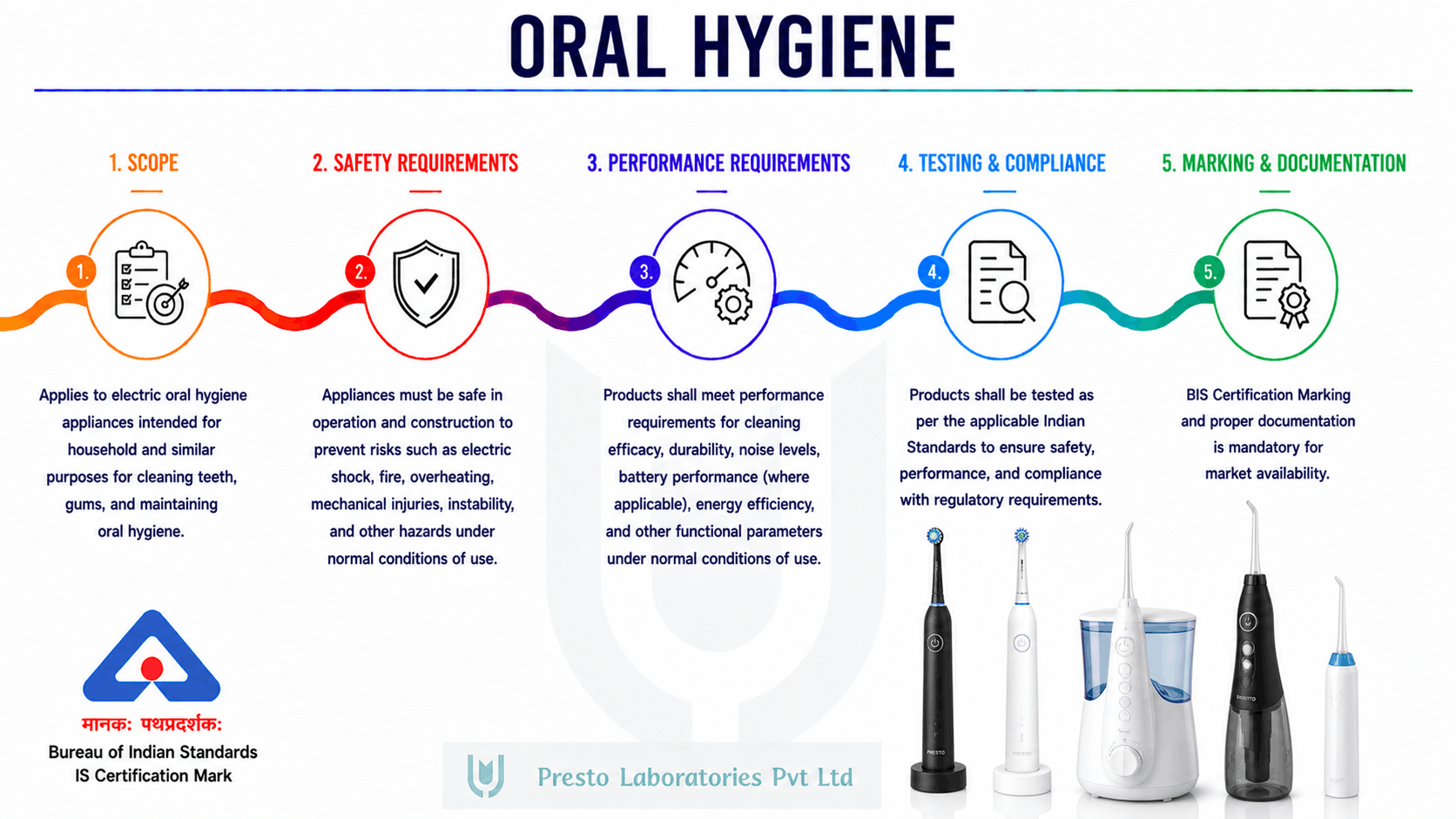
As these products are involved with day-to-day hygienics, consumers desire reliable performance that is safe. Any brand that wants to sell, import, or export these appliances in India must follow the BIS rules. The ISI mark is needed before products reach the market. Companies must follow the QCO order and pay the fee linked to licensing and customs work.
IS 302 Part 1:2024 explains the safety points for electrical appliances used up to 250 volts for single-phase and up to 415 volts for other supply lines. It covers appliances used in homes, shops, and light work areas. It does not cover large industrial tools, portable electric hand tools, or medical equipment. Extra rules may apply if the appliance is made for vehicles or ships. Nor do items that may be used by small children or by elderly users who are not to be supervised belong to this standard.
BIS approval helps brands place safe oral hygiene appliances in the Indian market. Presto Laboratories guides companies through each step and helps them complete all points needed for selling or importing these products in India.

 Talk to Us
 Book a Test
 Drop a Query