
Loading...
Highlighted industries are sectors that drive economic growth, innovation, and job creation. They often involve cutting-edge technologies, sustainable solutions.

We provide reliable testing solutions for solar and renewable energy companies. We make sure every component performs efficiently.

The helmet testing industry ensures safety and reliability for all forms of head protection in transportation, industry, defense, firefighting, and sports.

Fire extinguishers are vital fire-fighting gadgets that have been protecting different commercial, domestic, and food places since 1723.

We assure testing the domestic electrical equipment with the same rigor and care as industrial-grade machinery.


These products include various items used in our daily lives. It applies to items like toasters, irons, heaters, and other simple household products. The demand for these items keeps rising every year. Many makers are moving ahead by getting BIS approval and placing the ISI mark on their products. They also follow the QCO order for smooth trade in India and other countries.
Any home appliance sold in India must follow this rule. The ISI mark shows that the item is safe and can be used with confidence. Makers must follow the QCO order and complete BIS customs steps. There are some fees involved during the licensing stage. These points help keep users safe and support fair trade in the Indian market.
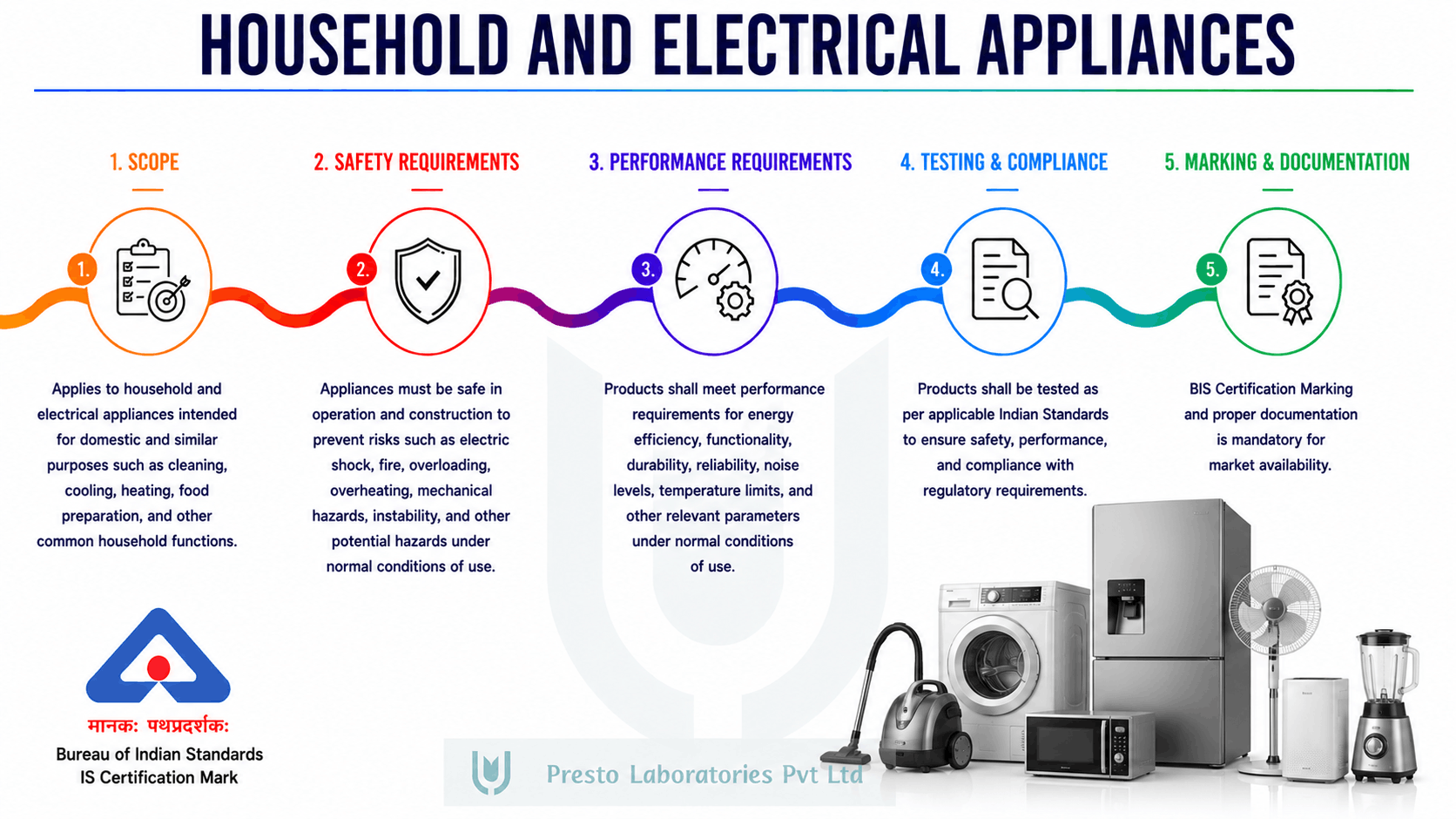
This standard sets the safety rules for many home appliances. It covers fridges, washers, ovens, and other daily-use electric items and also lists tests for insulation, heat, and stability. These checks help people feel safe while using these products. The rules guide makers to keep the design steady and safe during use.
BIS approval helps makers bring safe home appliances to the Indian market. Presto Laboratories guides manufacturers so they can move through every step with ease.

 Talk to Us
 Book a Test
 Drop a Query