
Loading...
Highlighted industries are sectors that drive economic growth, innovation, and job creation. They often involve cutting-edge technologies, sustainable solutions.

We provide reliable testing solutions for solar and renewable energy companies. We make sure every component performs efficiently.

The helmet testing industry ensures safety and reliability for all forms of head protection in transportation, industry, defense, firefighting, and sports.

Fire extinguishers are vital fire-fighting gadgets that have been protecting different commercial, domestic, and food places since 1723.

We assure testing the domestic electrical equipment with the same rigor and care as industrial-grade machinery.

Electric hot plates are now seen in many kitchens as more people cook at home and look for easy ways to warm food. These appliances come under IS 302 Part 2 Sec 207 1994 along with IS 302 Part 1. These rules tell how the product should be shaped, checked, and cleared before it goes out for sale. Indian makers and foreign suppliers need BIS certification if they plan to sell, import, or export these hot plates in the country.
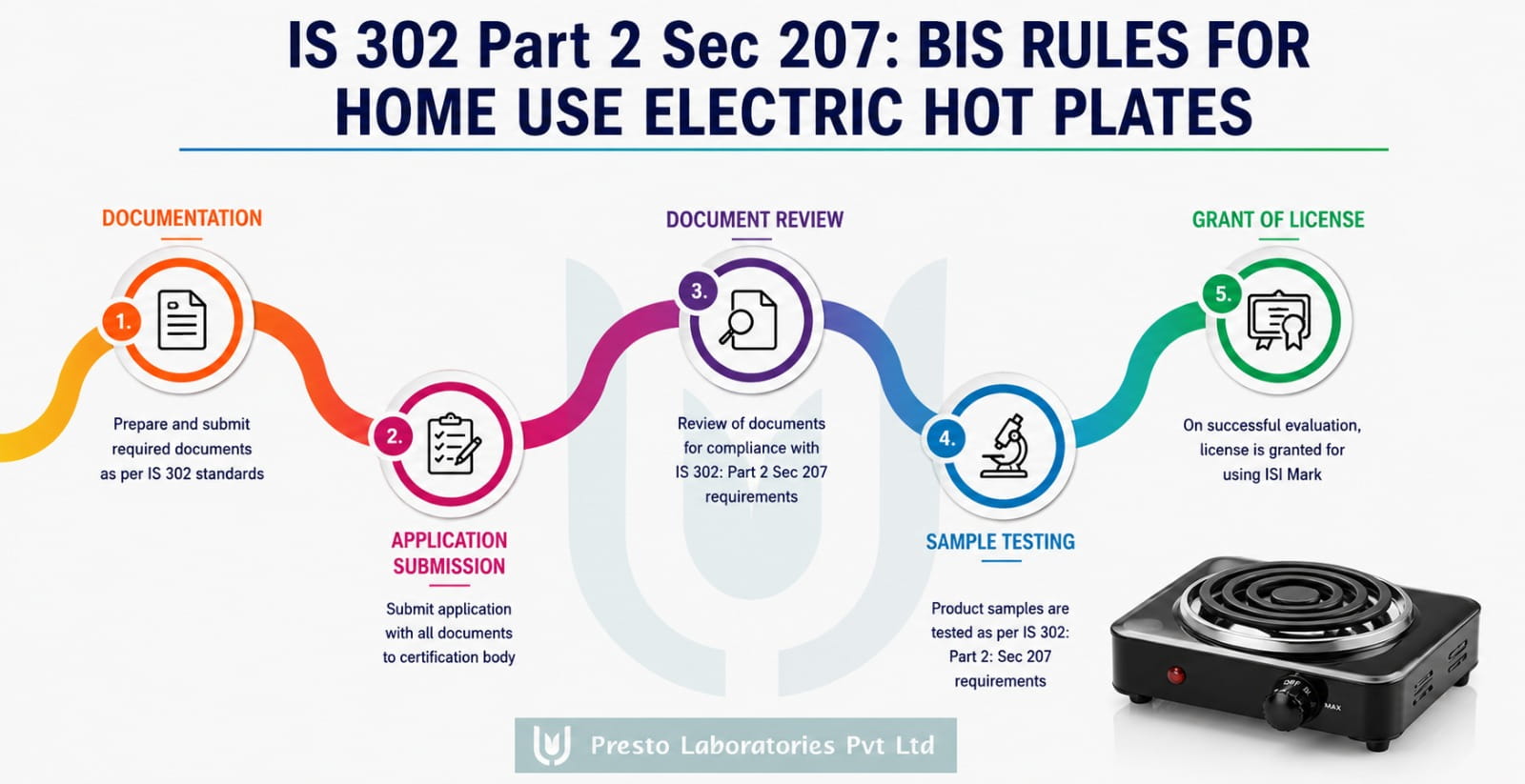
The ISI mark shows that the product has passed the safety checks set by the Bureau of Indian Standards. Brands apply under the QCO order and complete the online form with the needed fees. The permit helps with customs work and keeps the trade process smooth for both Indian and foreign companies.
IS 302 (Part 2/Sec 207): 1994 talks about the safety needs of electric hot plates meant for home kitchens. The rule speaks about design steps, performance checks, and construction limits meant to reduce fire and shock risks. It also mentions that the utensil placed on the heating surface should not extend too far and must be able to hold a set amount of liquid based on the heater’s power. Hot plates that match these points give users more comfort and fewer worries.
Many homes look for quick-cooking tools that do not take up much space. Small restaurants and paying guest homes also use them for simple tasks. This steady demand has made electric hot plates a growing market, and brands look for clear guidance while making or importing them.
BIS rules bring clear steps for making and selling electric hot plates in India. These steps help brands focus on safe heating, good design, and better use. Presto Laboratories supports manufacturers and importers throughout the process by assisting them in testing, forms, and approvals to get their product on its way.

 Talk to Us
 Book a Test
 Drop a Query